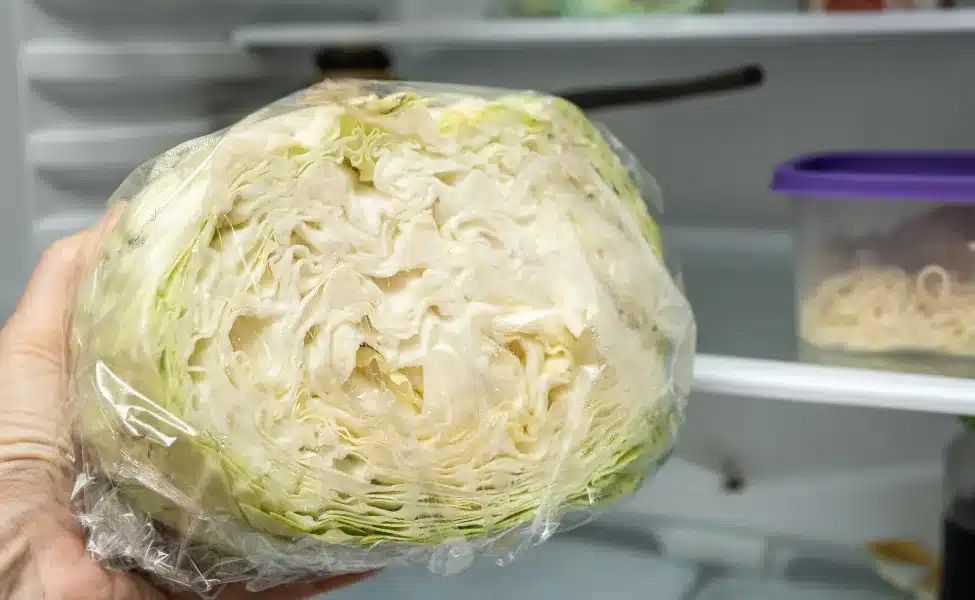
There Is Half a Cabbage in Your Fridge
You bought it with every intention.
You used a quarter of it on Tuesday and you have looked at the rest three times since, and by Sunday it will go in the bin, and you will feel the small, particular annoyance of having wasted both money and good food.
I asked my readers recently how many people they cook for.
Everyone who answered told me one or two.
Not one person said a full house.
And yet the supermarket still stocks for four.
We talk a lot about cooking for one.
We talk almost never about buying for one, and buying is where most of the waste and most of the money actually happens.
This is the half of the problem that nobody writes about, so let us do that.
Why Shopping for a Small Household Is Its Own Problem
It is not that you are bad at planning.
It is that three things are working against you at once.
Food is packaged for families.
A bag of spinach, a loaf of bread, a pack of chicken thighs, a bunch of celery.
Almost nothing in a supermarket is sized for one person eating one meal, and the smaller sizes, when they exist, usually cost more per portion.
Fresh food comes with a clock on it.
The moment it is in your fridge, it starts counting down.
For a household of four that clock barely matters, because the food is gone in two days.
For one person the clock is the whole problem.
And recipes are written for other people’s kitchens.
Buy the ingredients for seven named dinners and you have bought seven sets of things, several of which are used once.
The half-used jar of something is the tax on cooking from recipes when you cook alone.
None of that is a personal failing.
It is a mismatch between how food is sold and how you actually live.

Shop for the Four Parts, Not for Seven Dinners
Here is the shift that changes everything, and it is the same idea as my Simple Meal Formula.
A balanced plate is four things.
Protein, vegetables, healthy fats, complex carbs.
Half the plate vegetables, a quarter protein, a quarter carbs, a little olive oil to bring it together.
That formula has no serving size in it, and that is exactly why it works when you shop.
Instead of buying for seven dinners, buy for the four parts.
Something for protein.
A vegetable, green or colorful.
A good fat, usually olive oil.
And a carb: oats, rice, pasta, bread.
Then let the combinations happen at home, on the day, depending on what you feel like.
The difference in the trolley is enormous.
You go from a long list of specific things that all have to get used, to a short list of parts that go with almost everything.
Nothing goes to waste.
Nothing waits for one particular recipe to come along.
The Cupboard That Waits for You
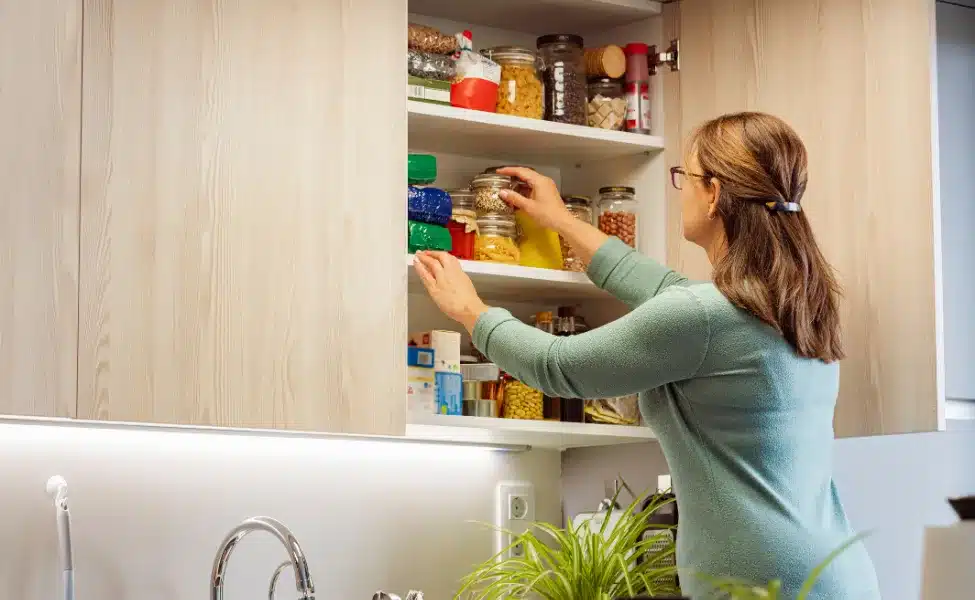
Once you shop for parts, the cupboard becomes the point.
You do not need a long list.
You need something for each of the four parts that will sit patiently until you want it.
Protein: tinned beans, tinned fish, eggs, lentils.
Vegetables: frozen and tinned, so the fridge is not the only place food lives.
Fats: a good olive oil, some nuts.
Carbs: oats, rice, pasta, whole-grain bread in the freezer..
And enough flavor in the cupboard that plain ingredients do not stay plain.
I have written about the seven things I would stock first, and why each one earns its shelf, in 7 Pantry Staples for Effortless Healthy Meals Every Day.
That is the long version.
This is the short one, and the short one is really a single observation.
Almost none of it is in a hurry.
Tins and freezer bags do not sit there quietly going off while you decide.
That matters more when you cook for one or two than it does for anybody else.
A well-stocked cupboard means the fresh food you buy is a bonus rather than an obligation.
Frozen and Tinned Are Not the Compromise
I want to be firm about this one, because a lot of women of our generation were taught otherwise.
Growers pick and freeze vegetables fast, often within hours.
Tinned tomatoes, tinned beans and tinned fish are proper food with the timer taken off.
They cost less, somebody has already done the preparing, and they wait for you indefinitely.
For a household of one or two they are not the lesser version of fresh.
They are the version that fits.
And the freezer is more patient than most of us think.
The USDA puts it plainly on its own page about freezing and food safety: freezer storage is for quality only, and frozen food stays safe indefinitely.
The months on the chart are about how good it will taste, not about whether you can eat it.
A bag of frozen spinach will feed you eight times, a handful at a time.
The fresh bag you bought with such good intentions will feed you twice and then go slimy in the drawer.
One of those is better food, and it is not the one with the higher price.
Buy fresh for what you will actually eat in the next two days, and let the freezer carry the rest of the week.
Buying Fresh, for a Household This Size
You still want fresh food.
Of course you do.
The trick is the rhythm, not the quantity.
- Buy little and often, for two or three days at a time. A shorter shop, more often, wastes far less than one big weekly haul. If getting to the shop is difficult, do the opposite and lean harder on the freezer.
- Choose the things that keep. Carrots, cabbage, onions, potatoes and apples will sit patiently for a week or more. Leafy salad and berries will not. Buy the patient ones in quantity and the impatient ones in small amounts.
- Buy loose where you can. Three carrots instead of a bag. One onion instead of a net. It usually costs slightly more per kilo and saves you far more than that in food you actually eat.
- Look at the fresh counter. The butcher and the fish counter will sell you one piece. The packaged aisle will sell you four.
If you would rather build the week around one fixed shopping day, I have written about how to do that in A Stress-Free Meal Planning System for the Week.
The Ten Minutes When You Get Home
This is the step almost everyone skips, and it is where the half cabbage gets saved.
Do not just put the bags away.
Spend ten minutes turning what you bought into what you will actually use.
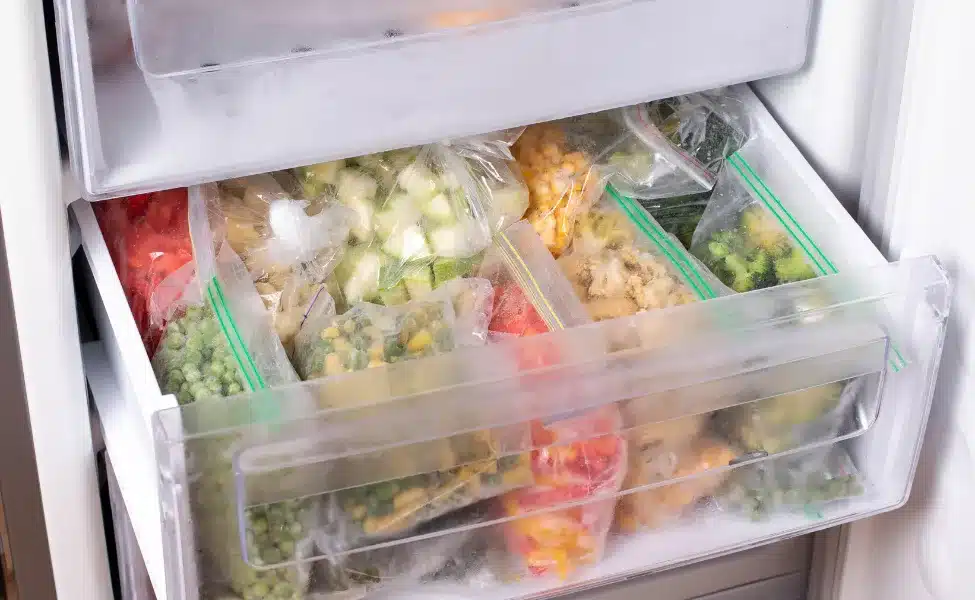
Split the pack of chicken or fish into single portions and freeze all but tonight’s.
Bread goes in the freezer in slices, and you take out what you need.
Grate or chop the cheese you will not get through.
Wash and cut the vegetables now, while you are already standing there, so that the tired version of you at six o’clock is only assembling.
Ten minutes on the day you shop buys back an hour across the week, and it is the difference between food you bought and food you eat.
Three Mistakes That Cost the Most
- Shopping for recipes instead of for parts. This is the big one, and everything else follows from it. Seven recipes means seven sets of requirements and a fridge full of orphans.
- Buying fresh for the whole week because it feels more virtuous. It is not more virtuous if a third of it goes in the bin. Frozen counts. Tinned counts.
- Treating the freezer as long-term storage rather than as part of the week. The freezer is not where food goes to be forgotten, it is where tomorrow’s dinner waits. Label things and keep them at the front. For the sake of how it tastes rather than whether it is safe, the USDA suggests soups, stews and cooked meat are at their best within two to three months, and cooked chicken within about four.
Where to Start
Not with a whole new system.
Start with one shop.
Before you go, do not write down seven dinners.
Write down four words: protein, vegetables, fats, carbs.
Buy something for each, buy fresh only for the next two days, and give yourself ten minutes when you get home to split and freeze.
Do that once and you will see the difference in the bin at the end of the week, which is the only measure that matters here.
If you would like the whole pattern written down, with the pantry list, five ready-made meal ideas and a swap guide for when you are out of something, my free Quick Pantry Meal Formula has all of it in one place.
And if the cooking itself is the part that wears you down rather than the shopping, I have written about that separately in Cooking for One: Why It Sometimes Feels Harder Than It Should.
Let’s Talk
What is the thing you throw away most often?
I would genuinely like to know, and it might be the next article.