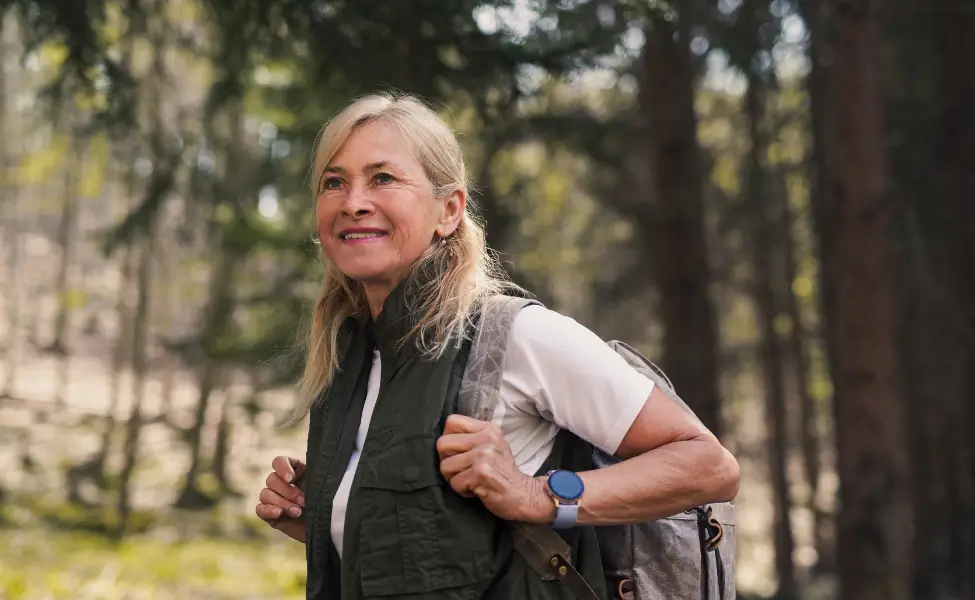
I have walked the Nijmegen Four Days Marches three times.
And if there is one thing all those kilometers taught me, it is this: what you eat on a long walk largely determines how it feels.
Make the right choices, and you walk for hours feeling light and energized.
Make the wrong ones and you drag yourself forward, or worse: you end up by the side of the path with stomach cramps.
The good news?
It is not complicated at all.
You do not need sports drinks, energy bars, or special powders.
Just real food, at the right moments. Still working on building your walking habit?
Start with how to build a daily walking habit that actually sticks.
Then come back for these eight tips, all learned the hard way, on the road.
Tip 1: Start with a good breakfast (or skip it)
Going for a short morning walk of up to an hour and a half?
Then you do not need to eat beforehand. Your body has plenty of reserves.
A glass of water and off you go.
There is something lovely about a walk on an empty stomach.
But if you are heading out for a long walk, do have breakfast first.
And choose wisely: you want energy that releases slowly, not a sugar spike that crashes an hour later.
That means slow carbohydrates, enough protein, and some healthy fat.
For example:
- Full-fat yogurt or quark with muesli and fresh fruit
- A bowl of oatmeal with fruit and nuts
- Whole-grain bread with a boiled or fried egg and a piece of fruit
This is exactly the kind of breakfast I walk on.
Literally.
Tip 2: Drink water, just water
During a long walk you lose fluids, even when you do not notice it.
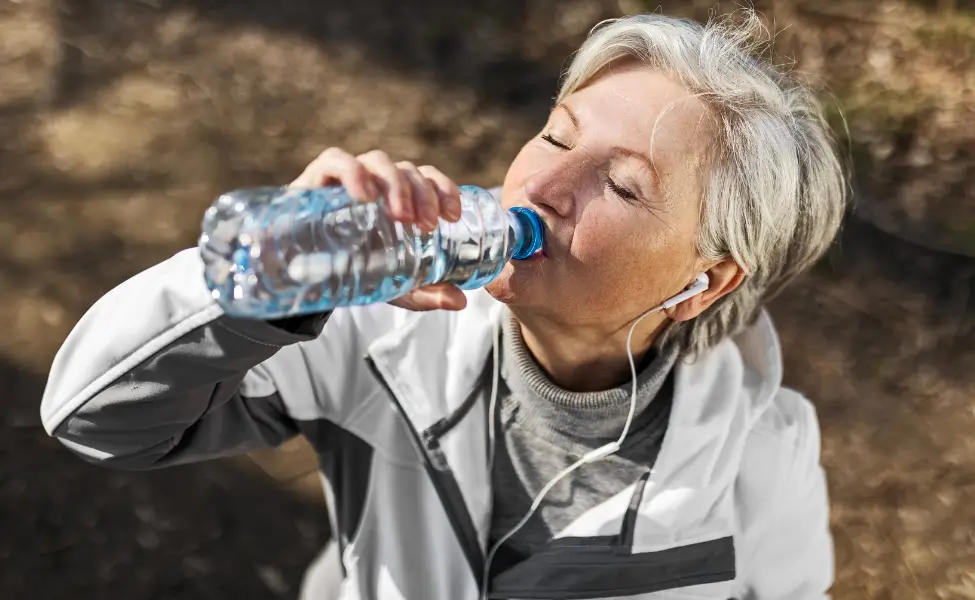
Replenish with plain water.
You really do not need sports drinks or sweet beverages: they give you a glucose spike, while what you want is a steady, even supply of energy.
Find water boring?
Add a slice of lemon or a sprig of mint.
For most walks, one liter to take along is enough, a bit more in warm weather.
Bring a refillable bottle, or use a water bladder with a drinking tube in your backpack if you are walking through an area without places to refill.
Tip 3: Do not snack your way through the walk
This may sound strange, but here it is: the moment you eat, energy goes to your digestion.
If you eat while walking at a steady pace, your body has to split that energy, and you will feel it.
Constant snacking on the move can also cause heartburn, stomach pain, or cramps.
Not exactly what you want out there.
Want to eat something?
Stop for a moment, sit down, and enjoy it.
Your walk will only feel better for it.
Tip 4: Take your time for a small meal along the way
After a few hours of walking, your body deserves a top-up.
Sit down and have something small: a sandwich from home, a muesli roll, or a banana.
Or settle in at a café.
A grilled cheese sandwich, a bowl of soup (which also replenishes your salts), or a slice of apple pie works fine too.
Yes, really.
One thing: keep it small.
A big meal sits heavy in your stomach, and you will feel it for the rest of the walk.
Tip 5: Do not forget your protein
This may be my most important tip, especially if you, like me, are past sixty.
A long walk asks a lot of your muscles, and your muscles need protein to stay strong.
After sixty, your body processes protein less efficiently, so every portion counts.
Harvard researchers point out that nearly half of adults over fifty do not even meet the daily recommended protein intake.
Want to know what exactly happens to your muscles after sixty?
I wrote this article about it.
Top up along the way or once you get home with a glass of milk or buttermilk, a hard-boiled egg, a small bowl of quark or cottage cheese, or bread with cheese or lean meat.
Eating plant-based?
A handful of nuts or bread with peanut butter or hummus works well too.
Tip 6: A cup of coffee works wonders
Did you know many sports drinks contain caffeine?
That is no coincidence: research shows that caffeine helps you sustain endurance effort for longer.
But you do not need a sports drink for that.
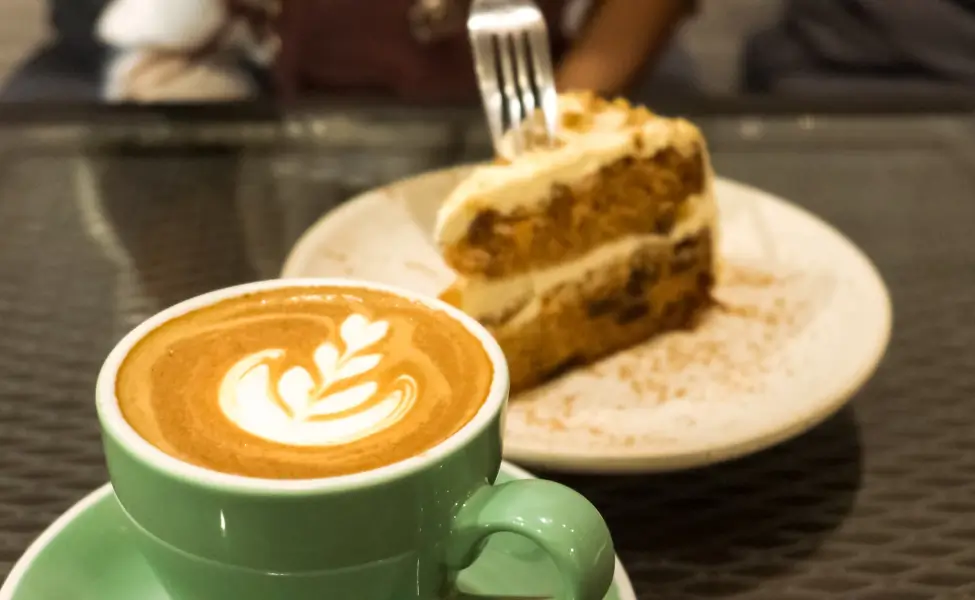
One or two cups of coffee give you the same effect, without unnecessary sugars and calories.
You feel more energetic and fatigue stays away longer.
By the way, more coffee does not mean more effect.
Two cups is the maximum that does anything for you.
And if you lean on coffee a little too much for your everyday energy?
Then this article is for you.
Tip 7: Leave the cookies and candy at home
At organized long-distance walks, you see it everywhere: cookies, waffles, dextrose tablets, and energy bars. Sociable, sure.
But your body does not need it.
All that sweetness causes big glucose spikes, followed by a sharp dip.
That dip is exactly the moment you think, I need to eat again.
And so it goes, on and on.
Choose something with slow carbohydrates instead.
But if you really want something to nibble on the way, then take some cherry tomatoes or mini cucumbers; they are surprisingly delicious during a walk.
Trust me on this one.
Tip 8: Reward yourself with a healthy meal afterwards
Home, shoes off, and that satisfied feeling.
Now your body deserves a proper meal: plenty of vegetables and a good portion of protein from chicken, fish, eggs, or a vegetarian alternative.
A mountain of pasta or potatoes is not necessary; a normal portion of carbohydrates is plenty.
With a few smart pantry staples in the house, a meal like that comes together surprisingly fast.
The effort has also used up vitamins and minerals, and the best way to replenish them is a fresh, home-cooked meal.
However tempting the pizza delivery or the fries are, cooking at home wins.
My tip: prepare your meal before you leave, so all you have to do when you get home is warm it up.
Because you will be tired, and that is allowed.
Looking for the perfect meal after a long walk?
This stir-fry from my 4-Week Mediterranean Meal Planner is on the table in fifteen minutes, packed with vegetables, and delivers exactly the protein your muscles need right now.
Simple Chicken Stir-Fry with Rice
Serves: 2 | Prep: 10 min | Cook: 15 min
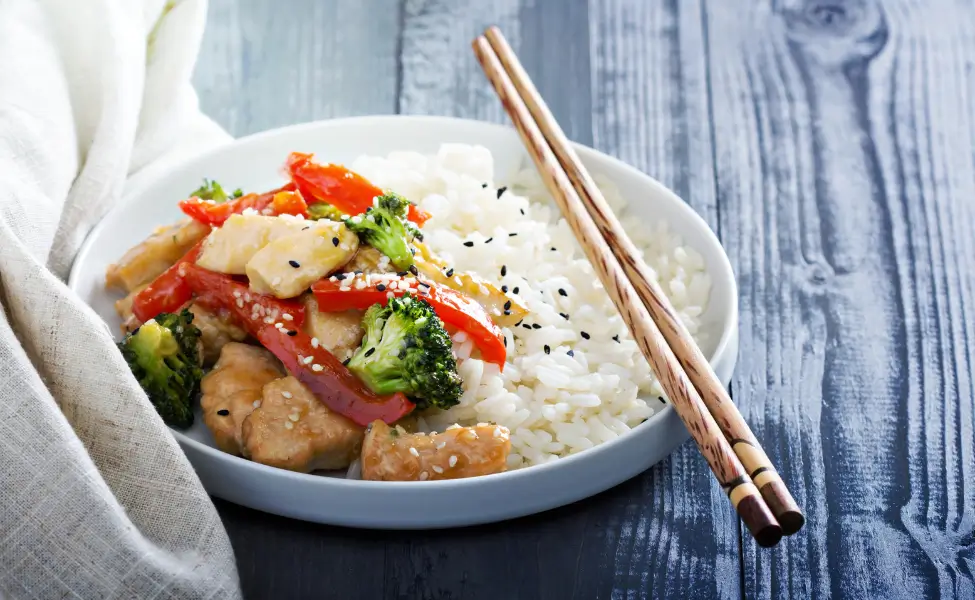
WHY THIS NOURISHES YOU: Stir-frying vegetables quickly retains their vitamins and minerals, while the colorful mix ensures diverse nutrients and antioxidants.
Ingredients:
- 200g (7 oz) boneless chicken breast, sliced thin
- 2 tablespoons (30 ml) vegetable oil, divided
- 1 red bell pepper, sliced
- 1 head broccoli, cut into small florets
- 1 medium carrot, thinly sliced
- 2 garlic cloves, minced
- 2 tablespoons (30 ml) soy sauce
- 1 teaspoon sesame oil (optional)
- Cooked rice for serving
Instructions:
- Heat 1 tablespoon vegetable oil in a large pan or wok over high heat.
- Add chicken and cook for 5-6 minutes until golden and cooked through. Remove and set aside.
- Add remaining oil to the pan.
- Add bell pepper, broccoli, and carrot. Stir-fry for 5 minutes until vegetables are tender-crisp.
- Add garlic and cook for 30 seconds.
- Return chicken to the pan.
- Add soy sauce and sesame oil if using. Toss everything together.
- Serve hot over cooked rice.
JOSEFINA’S TIPS: The key to good stir-fry is high heat and quick cooking. Don’t overcrowd the pan, or everything will steam instead of getting that nice golden color.
STORAGE: Keeps for 3 days in the fridge. Actually tastes great cold too.
This recipe comes from my 4-Week Mediterranean Meal Planner, four weeks of simple, nourishing meals that give you energy instead of taking it from you.