
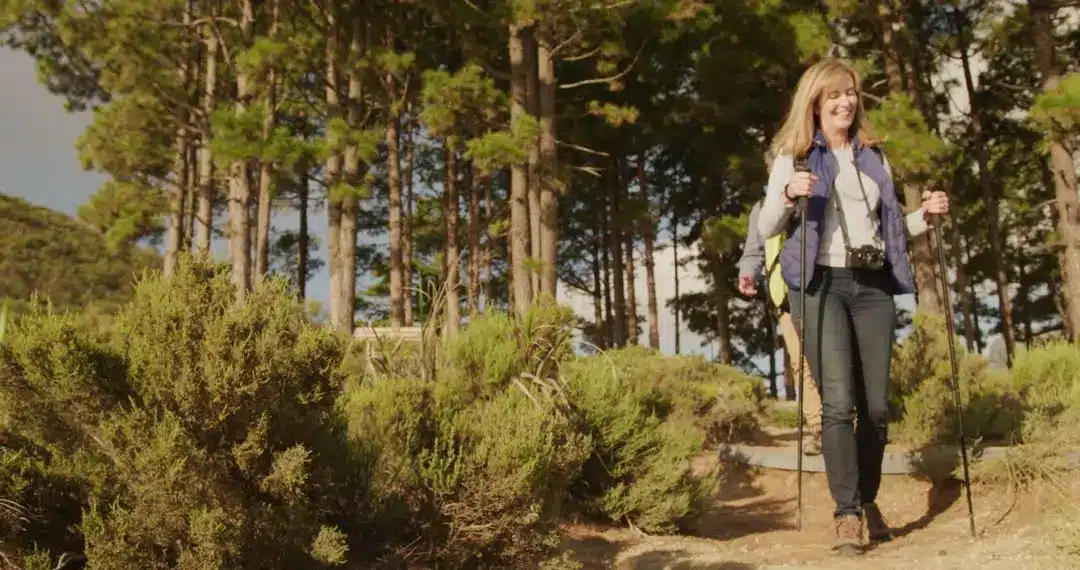
A walk among trees tends to leave you calmer than a walk around the block, and there is real research behind that feeling.
But what if you don’t have woods or water five minutes from home?
Or what if you’d love more time in nature but don’t always feel like mapping out your own route?
This is for you.
Why Nature Walking Is Worth the Extra Effort
You don’t need to have done anything especially hard to feel mentally tired by the end of the day.
Between messages, appointments, errands, and the constant pull of your phone, your attention gets asked for a lot.
A walk already helps you step away from that noise, but research suggests where you walk may matter too.
Time in nature has been shown to lower the stress hormone cortisol, and this isn’t only true for younger adults.
A recent study focused specifically on older adults found that repeated forest walks, just two 40-minute sessions a week for a month, led to measurably lower cortisol and improved emotional well-being, compared with the same amount of walking in an urban setting.
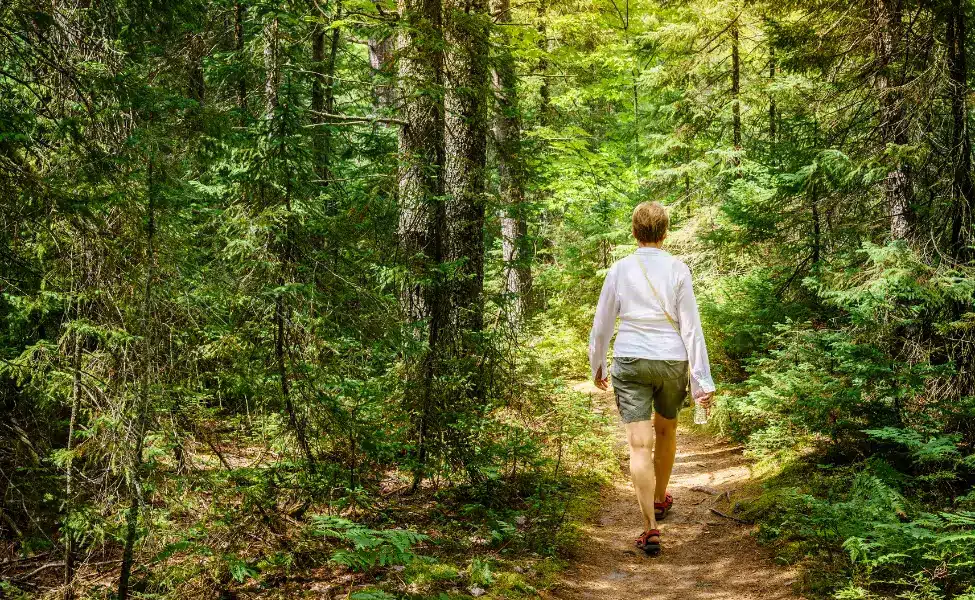
Nature also seems to restore something closer to focus itself.
Researchers at the University of Utah had 92 people complete a mentally tiring task, then measured their brain activity before and after a 40-minute walk, either through a botanical garden or across a nearby medical campus of roads and parking lots.
Both groups covered the same distance and got the same amount of exercise.
Only the group that walked through the garden showed improved executive attention, the kind you rely on to concentrate, make decisions, and resist distraction.
A separate study from the Max Planck Institute for Human Development found that a one-hour walk in nature reduced activity in the amygdala, a brain region closely tied to stress, while a walk through a busy shopping street left that activity unchanged.
A busy environment keeps asking your brain to sort through cars, signs, and changing lights, even when you aren’t aware of it.
Nature tends to hold your attention more gently, through sunlight, birdsong, or moving clouds, without demanding an immediate response.
If you’ve already read our piece on
Walking after sixty, think of this as the natural next step: not just walking more, but walking somewhere that gives your nervous system a genuine break.
Guided Nature Walks: Why a Guide Can Actually Help
Planning your own route is fine, but it isn’t always what you’re looking for.
A guided walk takes a few things off your plate.
- No navigation stress. You can look around instead of watching a map.
- Built-in company. Walking alongside others tends to make it easier to keep showing up.
- You learn something. A guide will often point out birds, plants, or history you’d otherwise walk right past.
- A steady, known pace and distance, which is reassuring if you’re still building up your stamina.
Where to Find One
If you live near a national park, the National Park Service offers ranger-led programs year-round, including walks and talks on local history, geography, and wildlife.
Many are free once you’re in the park.
The Sierra Club’s local chapters organize thousands of group hikes and nature walks across the country every year, open to members and non-members alike, and many are free or ask only for a small voluntary donation.
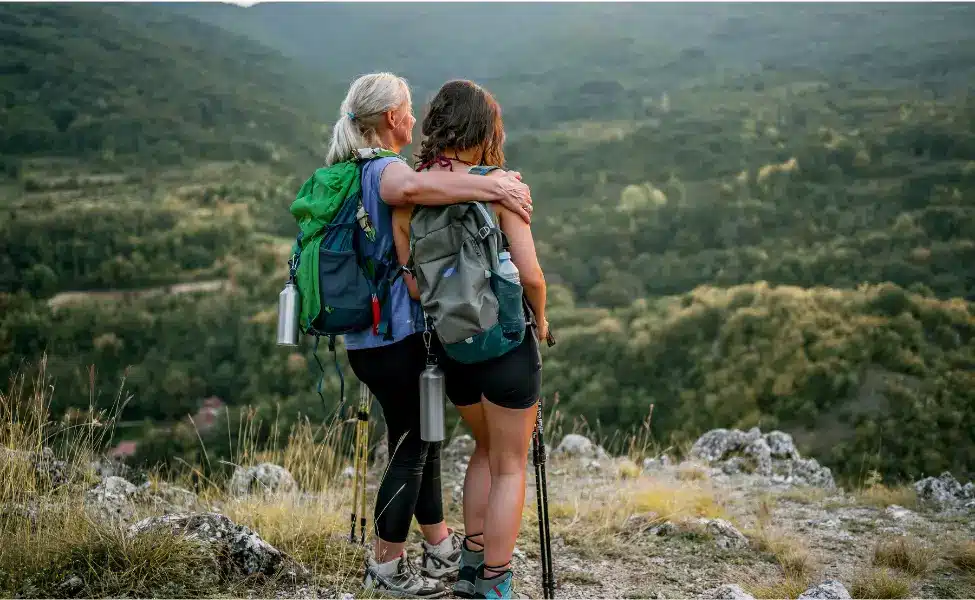
Local Audubon Society chapters are another good option, especially if birds interest you even a little.
Their walks tend to move slowly and stop often, which makes them a comfortable starting point.
State parks and botanical gardens frequently run their own guided walks too, so it’s worth checking directly with anything near you, even if it isn’t a national park.
Walking Vacations Without Wifi
The demand for retreats and resorts without wifi has been climbing, including at the higher end of the market. The idea is simple: a few days to a week somewhere where walking, not your phone, is the center of the day.
What to Look for Before You Book
- Pace and daily distance. Some trips cover 15 to 20 kilometers a day; others keep it deliberately gentle at 5 to 8. Always ask before you commit.
- Group size. Smaller groups tend to feel more personal and leave more room to walk at your own pace.
- Type of stay. Options range from simple cabins to fully supported walking tours with luggage transfers between stops.
- Wifi policy. Some places have none at all; others offer it only in shared spaces. Choose whichever balance feels right for you.
Companies like Backroads and REI Adventures run organized walking and hiking trips across the US and internationally, with a range of paces and support levels, so they’re a reasonable starting point for comparison shopping even if you end up booking elsewhere.
Closer to Home: Nature That’s Easy to Miss
Not every nature experience needs to be far away or fully organized.
You don’t need a perfect trail either, just a place where your eyes and mind can rest.
A few things people tend to overlook:
- City parks and green spaces. Even a tree-lined path along a bike route counts.
- Arboreta and botanical gardens, often open to the public for a modest fee or none at all.
- Historic cemeteries. Many older cemeteries, Mount Auburn in Boston being a well-known example, were deliberately landscaped as park-like spaces and tend to be quiet and shaded.
- Riverside and canal paths. A river or lake nearby usually comes with a walking path already attached.
- Community gardens, or a quiet neighborhood street with mature trees and gardens.
- Your own backyard. A few minutes sitting among plants can offer a welcome pause on a day when a longer walk isn’t in the cards.
Leave Some of the Noise Behind
The University of Utah participants walked without talking or using their phones, and that detail seems to matter.
A podcast or a call with a friend can make a walk enjoyable; there is nothing wrong with that, but if you want your mind to get a real break, try leaving your phone in your pocket for part of the walk instead.

Notice what’s around you.
Feel your feet meeting the ground, look at the shape of the trees, and listen for sounds you’d normally miss.
It doesn’t need to become a formal mindfulness exercise.
If 40 minutes feels like too much to start, ten quiet minutes is a completely reasonable place to begin; a small habit you actually keep beats an ambitious one you quickly abandon.
Getting Started Comfortably
- Build up your distance slowly. Ten minutes is a completely reasonable place to start.
- Wear supportive, already broken-in shoes, even for a short walk.
- Check the forecast and dress in layers.
- Carry water, even on a short outing.
- If you’re trying a guided walk for the first time, pick a short, low-key one so you can get a feel for it before committing to anything longer.
A Gentle Invitation for Your Next Walk
The next time your thoughts feel scattered or your mind feels full, step outside if you can and choose the greenest, quietest route available to you.
Walk at a pace that feels comfortable, let your shoulders relax, and give yourself permission to look around instead of hurrying toward the end.
You aren’t wasting time; you’re giving your mind room to breathe.
Let’s Talk
Have you ever joined a guided nature walk or thought about a walking vacation?
What’s holding you back from spending more time outdoors, if anything?