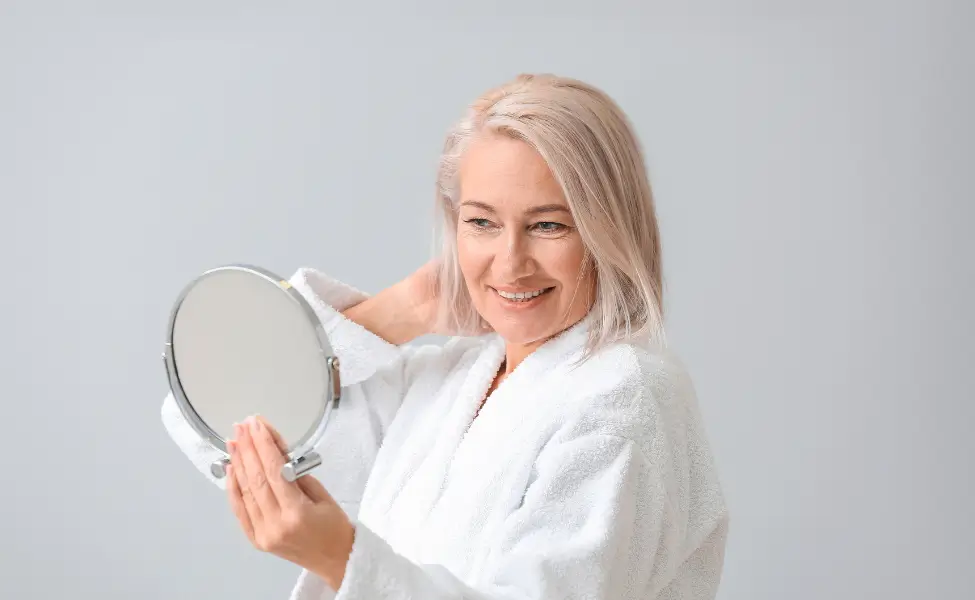
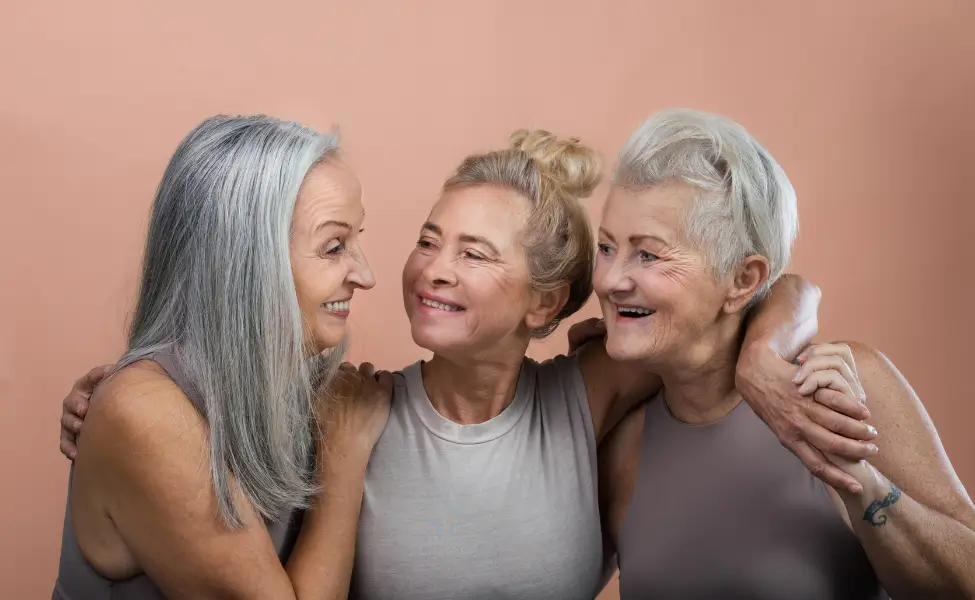
There is a moment most women describe somewhere in their early sixties.
You are sitting in the salon chair again, watching the timer, thinking about the cost, the maintenance, and the roots that appear two weeks after every appointment.
And a quiet thought surfaces: what if I just stopped?
That thought is not giving up. For a lot of women, it turns out to be one of the most confident decisions they ever make.
Going gray is not about letting yourself go.
It is about letting yourself be.
But there are things worth knowing before you begin, things most colorists do not tell you, things that make the difference between a transition that feels empowering and one that makes you want to grab the box dye at the drugstore by month four.
How Long This Actually Takes (And Why That Matters)
The single biggest reason women abandon their gray transition is unmet expectations.
They go in thinking it will take a few months and find themselves in an awkward two-tone phase that seems to last forever.
Setting realistic expectations from the start changes everything.
The honest answer is that the timeline depends almost entirely on your hair length.
Short hair or a pixie gives you the fastest route, typically six months to a year with a few strategic trims.
Medium-length hair runs closer to twelve months.
Longer hair needs patience, often eighteen months to two years or more.
My own transition took almost three years.
I started with warm brown hair at medium length and chose to go gradually through a combination of color stripping and a lot of highlights, slowly working toward silver.
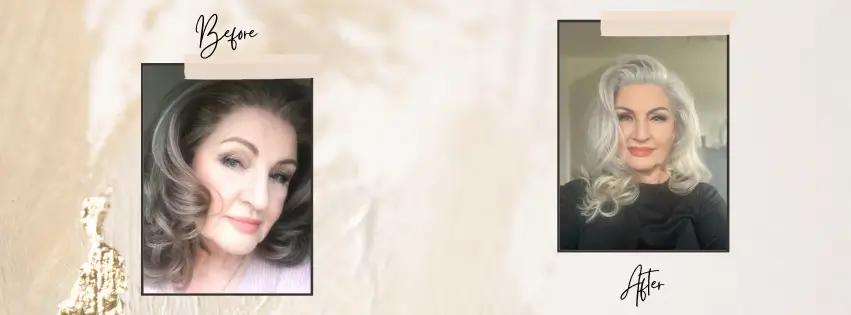
It was not always easy, and there were moments I questioned the whole thing.
But watching my hair grow longer and grayer over those three years, I would do it exactly the same way again.
The hardest phase for almost every woman is months two through six.
Your roots are long enough to be visible but not long enough to look intentional.
This is exactly the point where most women give up, and it is a shame, because the women who push through consistently say that everything shifts around month seven or eight.
The two-tone look softens, the silver starts to dominate, and something clicks. If you want to know exactly what to expect month by month, this honest breakdown covers the emotional arc as well as the physical one.
A good colorist can help you through this phase by adding highlights or lowlights in ash blonde or silver tones that blur the line between your natural color and your dyed ends.
Regular trims every six to eight weeks also help by removing the old color faster and keeping your hair looking healthy while the transition happens.
If low energy has been part of your experience during this transition too, this might explain what’s going on.
Silver Shampoo: What It Actually Does and How to Use It
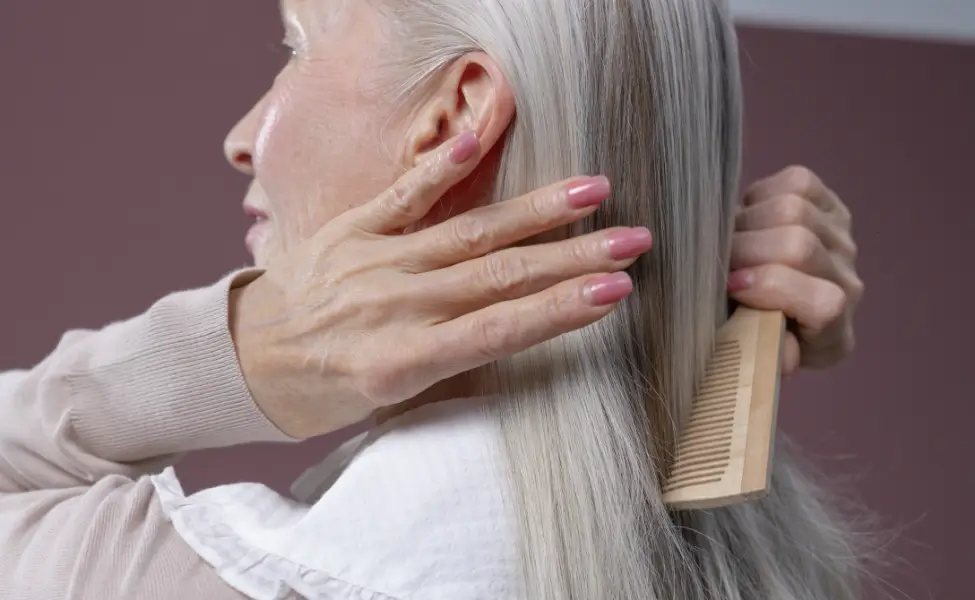
Gray hair picks up yellow tones from hard water, chlorine, sun exposure, and, simply, from the air.
Left unchecked, this yellowing makes silver hair look dull and a little dingy.
Silver shampoo, also called purple shampoo, fixes this because purple sits directly opposite yellow on the color wheel.
The violet pigments in the shampoo neutralize the brassiness and restore the cool, bright tone you want.
The original advice you may have heard, to use it only once or twice a month, is not enough for most women.
Most gray hair experts and professional colorists recommend starting with once a week and then adjusting based on what your hair needs.
If you notice a purple tint developing, reduce the frequency or leave the shampoo on for less time.
If yellowing persists, you can increase to twice a week.
The key variable is not how often you use it, but how long you leave it on.
Three to five minutes is the standard recommendation. Leaving it on longer than that, especially on porous or fine hair, is what causes the purple tint people worry about.
Use it weekly, watch the timing, and follow up with a good conditioner because purple shampoo can be drying with repeated use.
Not every gray hair turns yellow.
If yours stays bright and clear without toning, you do not need silver shampoo at all.
The Makeup Adjustment That Makes the Biggest Difference
When your hair was darker, it created natural contrast against your skin.
Gray hair is lighter, which means that contrast is gone, and your face can look a little washed out if you keep wearing exactly what you wore before.
The fix is not complicated, but it does require a small rethink.
The most important thing to understand is that your foundation shade should still match your actual skin tone.
Going darker is a common mistake that makes skin look muddy and unnatural.
What changes is everything else around it.
Choose a hydrating foundation with a luminous or radiant finish rather than a matte one, as this gives skin a healthy glow that balances the lightness of your hair.
The real shift happens in your blush and lip color.
Gray hair calls for more color on the face, not less.
Rosy pinks, warm corals, and peachy shades work beautifully on the cheeks and give the face the warmth it needs.
For lips, move toward berry tones, soft reds, and brighter pinks rather than neutral nudes, which tend to disappear against silver hair.
For eyebrows, the goal is soft definition rather than drama.
A taupe, soft brown, or dark blonde pencil usually works well.
Black can look harsh against gray hair.
Fill in lightly following your natural shape, and if your brows have thinned over the years, a little definition makes a noticeable difference to how pulled-together your whole face looks.
A few simple morning habits can make as much difference to how you look and feel as any makeup adjustment.
Colors That Work With Gray Hair (And a Few That Do Not)
Gray hair is cool-toned, which means it interacts differently with the colors in your wardrobe than your previous hair color did.
Understanding this saves you from looking washed out and helps you get more from the clothes you already own.
For a deeper look at which colors work with every shade of silver, this no-apology style breakdown is worth bookmarking.
Colors that genuinely come alive next to gray hair:
- Jewel tones. Cobalt blue, emerald green, and deep plum all create a striking contrast that makes both the color and your hair look more vivid.
- Rich warm tones. Berry red, burgundy, and rust bring warmth that gray hair does not naturally provide, which is exactly why they work so well.
- Crisp white. A clean white top is one of the most flattering things you can wear with silver hair. It creates brightness rather than competing with it.
- Gray on gray. Wearing gray next to gray works beautifully when you play with different textures and weights. A cashmere gray sweater with gray linen trousers looks intentional and elegant, not colorless.
Colors worth avoiding or approaching carefully:
- Orange and warm orange-brown. These clash with the cool tone of gray hair and tend to make skin look sallow.
- Very pale beige or cool taupe. These can wash out the complexion, particularly on fair skin. If you love neutrals, choose deeper camel tones or warm ivory instead.
If you have pieces in your closet that fall into the less flattering range, a scarf is genuinely the easiest solution.
A scarf in one of the colors above acts as a bridge between your hair and your outfit, giving your face the color it needs without requiring you to replace anything.
Wearing It Like You Mean It
Here is the thing that matters more than any of the practical tips above.
Gray hair reads differently depending on how you carry it.
On a woman who has made a deliberate choice and is comfortable in her own skin, it looks modern, confident, and frankly beautiful.
On a woman who is apologizing for it with her posture and her clothing, it reads differently.
You are not going gray because you ran out of options.
You are going gray because you decided to stop spending money and time on something that was never really for you and start looking like the actual version of yourself.
That is worth owning.
The women who feel the best about their silver hair are almost never the ones who had the easiest transition.
They are the ones who pushed through the awkward phase, adjusted a few things along the way, and came out the other side feeling more like themselves than they had in years.
Confidence with gray hair builds the same way confidence builds anywhere else.
In small moments, not big ones.

Going gray is one part of showing up as your best self.
What you eat is another.
The two go hand in hand more than most people realize.
Taking care of how you look on the outside and how you feel on the inside are really the same thing.
That is why the way I eat has always been part of how I take care of myself, not as a diet but as a daily choice to feel well.
If this is the direction you are moving in, a few small changes in how you eat can also make a real difference to how your hair looks and feels.
Protein, healthy fats, and the kinds of nutrients found in a Mediterranean-style diet support hair texture and skin health in ways that show.
My Mediterranean-inspired meal planner was built for women over sixty who want simple, nourishing food without the fuss.