There is something quietly funny about women who spend an hour weeding, deadheading, digging, and hauling bags of compost across the yard, and then say “I really should do more exercise.”
As if what just happened didn’t count.
It counted.
It counted a lot.
Gardening is one of those activities that has always been good for you, but nobody told you to think of it that way.
It was just something you did because you loved it, or because the raised bed needed attention, or because being outside with your hands in the soil is one of the few things that makes the noise in your head go quiet.
The fact that it also moves your body in ways that genuinely matter after sixty is almost a bonus.
What Your Body Actually Does Out There
Here is what a couple of hours in the garden actually involves from a physical standpoint.
You squat and lunge while pulling weeds, and reach overhead when training a climber up a trellis.
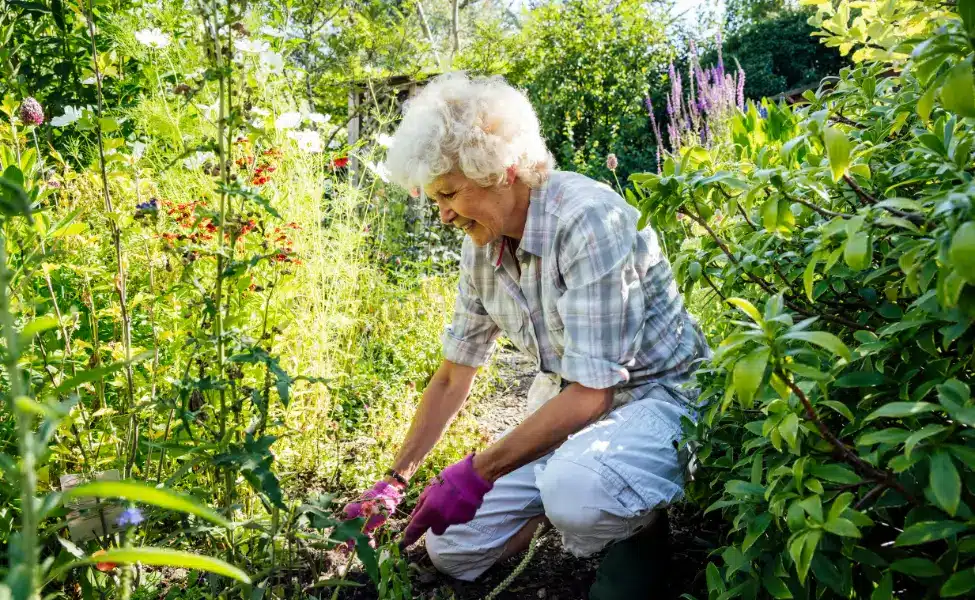
You rotate, bend, balance, grip, and push, often without even noticing because your attention is on the plant in front of you rather than the movement itself.
Mayo Clinic Health System confirms that gardening involves functional movements that mimic whole-body exercise, including squats and lunges while weeding and large muscle group activation while carrying supplies.
Research from Kansas State University found that older gardeners have measurably better hand strength and grip force than non-gardeners, which matters more than most people realise.
Hand and grip strength are strong indicators of overall physical function as you age.
A separate intervention study found that a regular gardening programme improved muscle strength in both the upper and lower body, along with flexibility, balance, and aerobic endurance, all without anyone setting foot in a gym.
None of that required a programme.
It required a garden and the habit of showing up to it.
If you want to complement your garden time with a few targeted moves that work the same muscle groups, these five gentle morning moves are a natural fit alongside a day spent outside.
Why This Kind of Movement Works So Well After Sixty
The reason so many structured exercise routines fail at this stage of life is not lack of willpower.
The approach is often the wrong fit.
Programmes built around repetition for its own sake, gym equipment that feels intimidating, or routines that require you to be somewhere at a set time all add friction to something that should feel natural.
Gardening removes almost all of that friction.
The motivation is built in because the garden actually needs you.
The movement varies naturally so no single muscle group gets overloaded.
You stop when you have had enough and pick it up again tomorrow.
That rhythm of gentle, consistent effort is exactly what research on healthy aging keeps pointing back to as the thing that produces lasting results.
Not intensity, not duration, but showing up regularly and moving in ways your body finds familiar.
This is the same principle behind daily walking, and if you have been thinking about adding that to your routine as well, Walking After Sixty: A Gentle Start That Actually Sticks covers exactly how to begin without overdoing it.
The other thing worth knowing is that gardening, unlike most forms of exercise, gets you outside.
Sunlight supports vitamin D levels and helps regulate your sleep cycle.
Fresh air genuinely does affect how deeply you breathe.
Multiple studies show that spending time in green spaces lowers cortisol levels.
Cortisol is the stress hormone that increases with age and silently affects a wide range of problems, from sleep quality to weight management.
You are not just moving your body when you garden. You are changing the chemical environment inside it.
What It Does for How You Feel
This is the part that does not always make it into the conversation about physical activity, but it matters just as much.

Gardening gives you visible, tangible results at a time in life when results can feel hard to come by.
A seed you planted last week has sprouted.
The corner that looked overgrown now looks exactly as you imagined it. Something you tended is thriving.
That feedback loop, where effort produces something you can see and touch, builds a kind of quiet confidence that is different from anything a fitness tracker can measure.
Research published in Nature Medicine found that hobbies including gardening are linked to lower levels of depression in adults aged 65 and older.
A large study of nearly five thousand middle-aged and older adults found that regular gardening is associated with better mental wellbeing and greater life satisfaction.
These are not small effects and they are not explained by the movement alone.
The sense of purpose, the connection to something living, the rhythm of routine, all of it contributes.
For women who have moved through significant life transitions in their sixties, retirement, children leaving, shifts in identity, that sense of purposeful daily activity can be genuinely stabilising.
Gardening sits naturally alongside other mood-lifting activities that keep you moving without feeling like exercise.
If you are curious what else fits that description, 9 Simple Hobbies That Lift Your Mood and Keep You Moving is worth a read.
The Movements That Give You the Most
Not all gardening tasks work the body in the same way, which means you can lean into certain activities if you want more from your time outside.
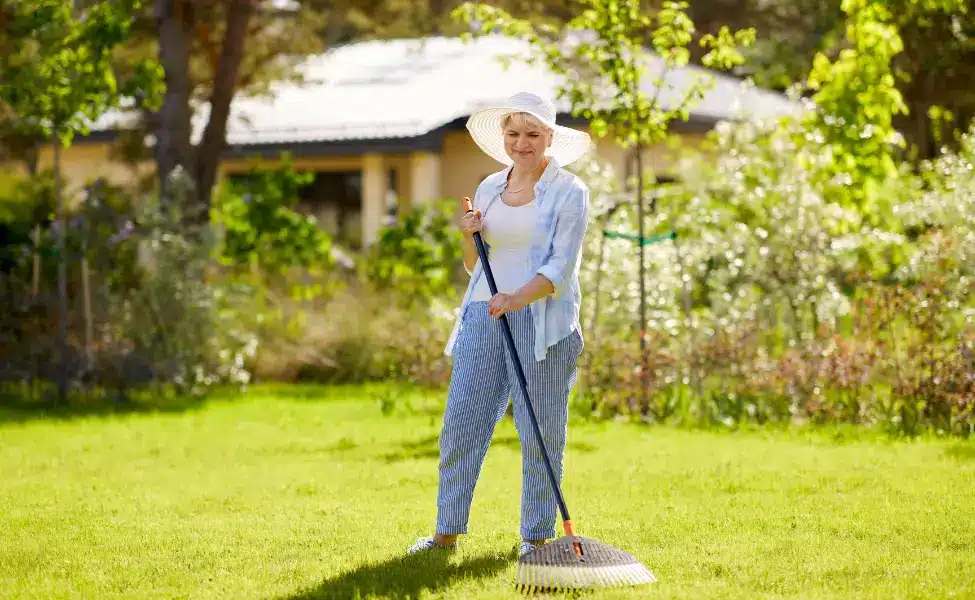
- Raking and hoeing. These use the whole body and sit firmly in the moderate-intensity range. Twenty to thirty minutes of raking on most days meets the activity recommendations most health organisations set for older adults.
- Digging and turning compost. This works the core, shoulders, and arms and builds the kind of functional upper-body strength that makes daily life easier.
- Weeding from a squat or kneel. This is the closest thing to a lower-body workout that does not feel like exercise. Your quads, glutes, and hips all engage. Use a kneeling pad and keep your back long rather than rounded.
- Carrying and transplanting. Moving pots, watering cans, and bags of soil works the whole body and challenges your grip. Go slowly and keep loads manageable.
- Balancing while reaching. Stretching to tend a tall plant or stepping carefully across uneven ground quietly trains the stabilising muscles around your ankles and hips, the same ones that protect you from falls.
You do not need to approach any of this like a training plan.
Just notice what you are doing and appreciate that it is working.
The Table You Already Set
There is a connection between gardening and eating well that tends to happen almost without effort.
Women who grow their own herbs, tomatoes, or salad leaves find themselves reaching for fresh food more naturally.

Not because they are trying to eat better, but because the food is there, it is good, and they grew it themselves.
That small shift in what is available and visible in the kitchen changes what ends up on the plate.
This matters because gentle movement and nourishing food reinforce each other in exactly the same way that walking and eating well do.
Your body feels better when it moves.
When it feels better, you want to feed it something that sustains that feeling.
The garden is simply a very pleasant way into that cycle.
If you want simple, seasonal meals that sit naturally alongside an active outdoor life, my Mediterranean-inspired meal planner was designed with exactly that in mind.
No complicated techniques, no ingredients you have never heard of.
Just straightforward, nourishing food for women over sixty who want more energy without making mealtimes a project.
If you would like to take a look, You can explore it here.