

You deserve to wake up refreshed, even in your 60s. While many people resign themselves to poor sleep as they age, the truth is simpler.
Small, targeted changes can restore the deep rest you remember from younger years.
I’ve learned that a few small changes can make a big difference. You don’t need fancy gadgets or to overhaul your whole lifestyle.
Hormonal shifts and changing body rhythms cause most sleep difficulties after 60. These changes might sound scary, but they’re just part of getting older.
Have you noticed yourself waking at 3 AM, staring at the ceiling with a racing mind?
I want to share what actually works to help you sleep better in your 60s. You’ll see why your sleep patterns have shifted and get some practical steps that might help you sleep through the night again.
Why Your Sleep Changed After 60 (And What You Can Do About It)
Your sleep system naturally shifts after 60. Rest gets lighter and more broken up, and your internal clock doesn’t work quite the same.

Your Brain Produces Less Deep Sleep
Sleep feels different after 60. Your brain produces fewer of those deep sleep waves that used to leave you refreshed.
Sleep just gets lighter and more fragmented. You’ll probably wake up more during the night because your sleep cycles change.
Many adults over 60 spend less time in deep sleep stages. Deep sleep stages allow your body to repair tissue damage. Your brain clears out toxins during these crucial hours.
You still need about 7 to 8 hours of sleep, though. That’s something many folks miss. Your need for sleep doesn’t drop, but your ability to get good sleep does.
Sleep efficiency drops too. You might notice you spend more time in bed just lying awake.
A healthy sleep efficiency is around 85%. The changes start slowly in your 50s, but by your 60s, you might feel less rested even after a full night in bed.
Your Body Clock Runs Differently Now
Your internal body clock gets weaker as you age. The suprachiasmatic nucleus (the brain’s master clock) becomes less responsive to light signals.
You may feel sleepy earlier and wake up extremely early. This is called advanced sleep phase syndrome.
Does 8 PM feel like midnight used to feel?
Many adults over 60 feel exhausted by 8 PM. They wake up around 4 AM, unable to fall back asleep. Your body also makes less melatonin after 60.
Melatonin signals your brain when it’s time to sleep. Lower levels make it harder to fall asleep and stay asleep.
Light exposure matters more as you get older. Your eyes become less sensitive to bright light, so your brain can’t always tell if it’s day or night.
Temperature control changes too. Your body doesn’t cool down as well before bed, and that natural cooling helps trigger sleepiness.
Getting sunlight in the morning and avoiding bright screens at night can help reset your rhythm. Even 15 minutes outside in the morning can make a difference.
Five Sleep Disruptors That Increase After 60
Insomnia is the most common problem I see. Up to half of people over 60 struggle to fall asleep or stay asleep.
Picture this scenario. You go to bed at 10 PM, feeling exhausted. Two hours later, you’re still awake, mind racing through tomorrow’s tasks. You finally drift off at midnight, only to wake at 2 AM needing the bathroom. Sound familiar?

Four common conditions disrupt sleep after 60. Arthritis and joint pain wake you throughout the night. Diabetes increases bathroom trips. Heart issues make breathing difficult when lying flat. Anxiety and depression degrade sleep quality even when you manage to doze off.
Sleep apnea is more common after 60. About 36% of older adults have this condition, where breathing stops briefly during sleep.
It often goes undiagnosed. Medications can also interfere with sleep.
Four medication types commonly interfere with sleep patterns.
Some common causes include blood pressure meds, steroids, antidepressants, and pain relievers.
Restless leg syndrome affects up to 20% of people over 80. It causes uncomfortable sensations in your legs that make you want to move them constantly.
Many people develop periodic limb movements during sleep, too. Your legs might jerk or twitch every 20 to 40 seconds, breaking up your sleep even if you don’t remember waking.
The key is figuring out which specific issues are disrupting your sleep. Most sleep problems after 60 have treatable causes.
These numbers might sound discouraging, but here’s the important part. Each of these conditions responds to specific interventions.
Understanding why sleep changes matters, but action matters more. Here are four proven strategies that address the root causes we just covered.
What if four simple changes could transform your nights?
Four Proven Strategies for Better Sleep After 60
Getting better sleep after 60 comes down to four things. Keep a steady sleep schedule, build smart bedtime habits, create the right sleep space, and learn to relax before bed.
Strategy 1: Lock In Your Sleep Schedule
Consistency is your best tool for better sleep. Your body clock works best if you go to bed and wake up at the same time every day.
Pick a bedtime that gives you 7 to 8 hours of sleep. Try to stick to it, even on weekends.
Choose a wake-up time and use it every single day. This helps train your body’s natural rhythm.
A few tips include setting a bedtime alarm 30 minutes before you want to sleep, avoiding naps after 3 PM, and keeping naps under 20 minutes if you need one.
Sleep schedules are habits. The more you stick to them, the easier it gets.
After 14 to 21 days of consistency, your body adapts to the new schedule.
Strategy 2: Create a 90-Minute Wind-Down Routine
A good bedtime routine tells your brain it’s time to wind down. I recommend starting this routine about 60 to 90 minutes before your bedtime.
Blue light from phones, tablets, and TVs can trick your brain into staying awake. Try turning off all screens at least an hour before bed.
Here are some better bedtime activities. Read a real book or magazine. Listen to calm music or nature sounds. Do gentle stretches. Write in a journal.
Keep your evening meals light. Heavy foods can make it hard to fall asleep.
Stop eating large meals three hours before bedtime. Also, avoid caffeine after 2 PM and try to limit alcohol.
Both can disrupt your sleep quality, even if they don’t keep you awake.
Strategy 3: Transform Your Bedroom Into a Sleep Sanctuary
Your bedroom should be a sleep sanctuary. Small changes to your sleep environment can make a difference.
Keep your room cool, around 65 to 68°F. A cooler room helps your body temperature drop for sleep.
Block out light with blackout curtains or an eye mask. Even minimal light exposure disrupts your deep sleep cycles.
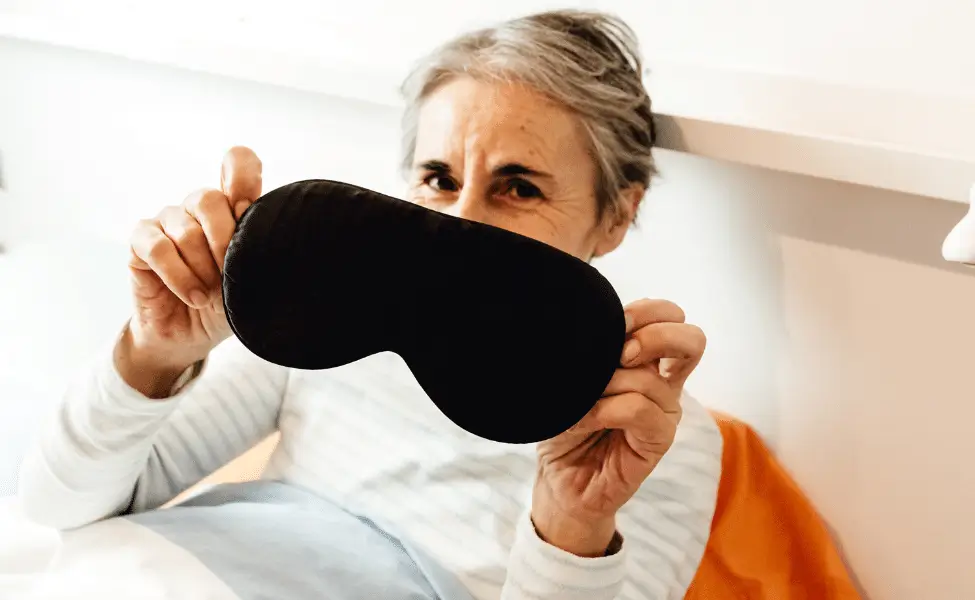
If outside noise wakes you up, try a white noise machine or earplugs. Make sure your mattress and pillows support your body well.
Replace your mattress every 7 to 10 years and pillows every 1 to 2 years. Get rid of distractions like work papers, bills, or electronics from your bedroom.
Your brain should connect this space only with sleep and rest.
These environmental changes work together. Cool temperature plus darkness signals your brain that sleep time has arrived.
Your bedroom setup creates the foundation for good sleep. Now let’s address what happens inside your mind when you lie down.
Strategy 4: Quiet Your Racing Mind With These Techniques
Relaxation exercises can help quiet a busy mind. They also get your body ready for sleep.
These techniques are great for people who lie awake thinking about their day.
Progressive muscle relaxation works like this. Start at your toes. Slowly tense and relax each muscle group as you move up to your head.
This can ease physical tension.
Deep breathing uses the 4-7-8 method. Breathe in for 4 counts, hold for 7, then breathe out for 8.
Do this 3 or 4 times.
Mindful meditation requires you to focus entirely on each inhale and exhale. Alternatively, mentally scan your body from toes to head, noticing tension without trying to fix it.
If your mind races with worries, keep a notepad by your bed. Write down what’s bothering you so you can deal with it tomorrow.
Try guided meditation apps or calm music meant for sleep. You’ll need to experiment a bit to find what works for you, but once you do, stick with it as part of your routine.
Start with one strategy this week. Master your sleep schedule first, then add the wind-down routine in week two. By week three, you can optimize your environment while continuing the first two habits.
What If These Strategies Don’t Work?
Give each strategy three weeks before judging results. If you see no improvement after implementing all four strategies for a month, schedule an appointment with a sleep specialist. You may have an underlying condition like sleep apnea that requires medical treatment.