

You’re waiting for motivation to strike before you tackle that messy kitchen.
That spark never comes.
Here’s why you’ve got it backwards.
You don’t wait for motivation.
You create it through action.
Complete one small task.
The next one gets easier.
That’s how momentum actually works.
When did you last feel that spark of accomplishment from finishing something small?
This explains why grand plans often fail whilst tiny habits succeed. When life feels overwhelming at home, dramatic transformation isn’t the answer.
Small daily actions build real confidence and create genuine balance.
Stack enough small wins and bigger changes stop feeling impossible.
Why Does Finishing Small Tasks Feel So Good?
When you complete a task, your brain releases dopamine.
You feel accomplished. You want to do it again. This works for any achievement, big or small.
The strongest dopamine hit comes from tasks that challenge you just enough.
Too easy feels boring. Too hard feels impossible.
Scientists analysed nearly 12,000 work diaries.
They found one factor mattered most for positive mood and motivation. Making progress in meaningful work.
Meaningful matters most. Progress on tasks you care about boosts motivation dramatically. Pointless busywork? Your brain barely registers it.
Think about it. You feel proud after organizing one drawer. You feel nothing after scrolling Instagram for 20 minutes. Same time investment. Different brain response.
This is why washing the dishes after you use them feels rewarding whilst mindlessly scrolling your phone doesn’t. Your brain tracks both completion and personal relevance.
The confidence-building cycle works like this. Complete one small action. Feel motivated for the next action. Repeat until momentum builds.
Confidence grows when you keep small promises to yourself. Each time you commit to something and follow through, you give yourself direct evidence of your reliability.
You’re not thinking positive thoughts. You’re collecting proof. Each time you succeed, your brain literally rewires itself. You become someone who follows through.
10 Small Wins You Can Do Today
Pick 2-3 from this list. Complete them. Notice how you feel afterwards.
| Area | Small Win | Time Required |
|---|---|---|
| Morning | Drink a full glass of water upon waking | 1 minute |
| Morning | Make your bed before leaving the bedroom | 2 minutes |
| Morning | Write 3 specific intentions for the day | 3 minutes |
| Kitchen | Put dishes directly in dishwasher after eating | 30 seconds |
| Kitchen | Wipe down counters after cooking | 1 minute |
| Living Space | Tidy one visible surface completely | 5 minutes |
| Evening | Lay out tomorrow’s clothes and shoes | 3 minutes |
| Evening | Journal 3 things you accomplished today | 3 minutes |
| Any Time | Take a 5-minute walk around your home or garden | 5 minutes |
| Any Time | Reply to one message you’ve been avoiding | 2 minutes |
These are quick actions that show you’re showing up for yourself.
Two Simple Routines That Create Unstoppable Momentum
You understand the science now. Time to put it into practice.
Consistency beats intensity for habit formation. Habits need repetition in stable contexts. The average? Roughly 66 days. Some people need just 18 days.
Others need 254. Small actions done daily outperform big efforts done occasionally.
Morning Sequence (10 minutes total)
Make your bed. Two minutes. Walking past a made bed throughout the day gives you repeated visual proof you’re handling things.
Drink water whilst reviewing your three daily intentions.
Three minutes. Physical rehydration paired with mental clarity about what matters today.

Do one small physical action. Five minutes. Stretch, walk briefly or do light tidying. Movement shows energy and readiness.
Keep this sequence consistent. Your brain forms stronger habits when the same actions occur in the same order in the same context.
Evening Sequence (8 minutes total)
Write what you accomplished today. Three minutes. Even on difficult days, you did something. Find three specific actions and write them down. This trains your brain to notice progress instead of fixating on gaps.
Prepare for tomorrow. Five minutes. Lay out clothes, prepare the coffee maker, set out anything needed for morning. This removes tomorrow’s decision-making and ends today with a sense of completion rather than anxiety.
How to Set Goals You’ll Actually Achieve
Daily routines give you momentum. Goals give you direction. You need both.
Goals need specificity to create progress rather than frustration. Transform broad intentions into concrete, observable actions.
Instead of “get organised,” choose “empty and sort the kitchen junk drawer.”
Instead of “exercise more,” choose “walk for 10 minutes after breakfast.”
And Instead of “eat healthier,” choose “include a vegetable with dinner.”
Three-Level Framework
Daily tasks mean 1-3 tasks, 30 minutes total. Write them each morning, check them off each evening.
Examples include make bed, tidy one surface, prepare dinner ingredients.
Weekly tasks mean 1-2 tasks, 1-2 hours total. Build on daily wins.
Examples include organise one cupboard, cook a new recipe, sort through a pile of papers.
Monthly tasks mean one project. Combine several weeks of smaller efforts. Examples include rearrange a room, establish a morning routine, create a meal planning system.
Write these where you’ll see them daily. Physical writing makes goals feel more concrete than digital typing.
Design Your Space So Success Becomes Automatic
Your environment beats willpower every time. Design spaces so desired behaviours require less effort.
Visual cues for habits you want include journal on bedside table, workout clothes where you’ll see them first thing, healthy snacks at eye level.
Put your running shoes by the bed. You’ll see them first thing. That’s one less decision between you and a morning walk.
Hide cues for habits you don’t want. Phone in a drawer during focused time. Unhealthy snacks in opaque containers out of reach.
This isn’t willpower, it’s friction reduction. When good choices sit directly in front of you, you’ll naturally choose them.
Reward Immediately
Timing matters. Celebrate right after completing the action, not hours later. This helps your brain link satisfaction directly to the behaviour.
The reward doesn’t need monetary value, just genuine pleasure happening immediately.
Favourite tea after morning routine.

Five minutes in the cleaned space you just tidied.
Pleasant music whilst admiring a completed task.
Match rewards to the domain. Physical accomplishments get physical rewards, like a relaxing bath. Mental accomplishments get mental rewards, like favourite music. Keep rewards modest and proportional.
What to Do When You Hit a Wall
What happens when you hit a wall and your momentum dies?
Plateaus are normal. The recovery matters more than the disruption.
Three Questions to Ask
Is this goal actually meaningful to you? Progress requires working on things that matter personally. If you’re forcing yourself toward someone else’s expectations, motivation evaporates.
Is the step size right? Consistently skipping a habit means it’s too large. Reduce it. Feeling bored means it’s too easy. Increase the challenge slightly.
Have circumstances changed? New demands truly disrupt routines. Acknowledge this and adjust rather than pushing through inappropriately.
Getting Back On Track
Resume immediately without self-punishment. Don’t wait for Monday or any arbitrary restart date. Resume today with whatever small action is possible right now.
Focus on the next single action. Not the week ahead, just the immediate next step. What’s one small thing you can do in the next five minutes?
Review what happened. Did the disruption reveal an unrealistic expectation? Use setbacks as information for building a more robust approach, not evidence of personal failure.
The Real Story: Emma’s Kitchen Reset
This works in real life, not just theory. Here’s exactly how one person used it.
Emma felt overwhelmed by her constantly messy kitchen. Every evening, dishes piled in the sink and counters stayed sticky from cooking. She’d tried elaborate organisation systems that lasted three days before collapsing.
Instead of another grand plan, she chose one rule. Put dishes directly in the dishwasher after every meal. Never place them in the sink “for later.”
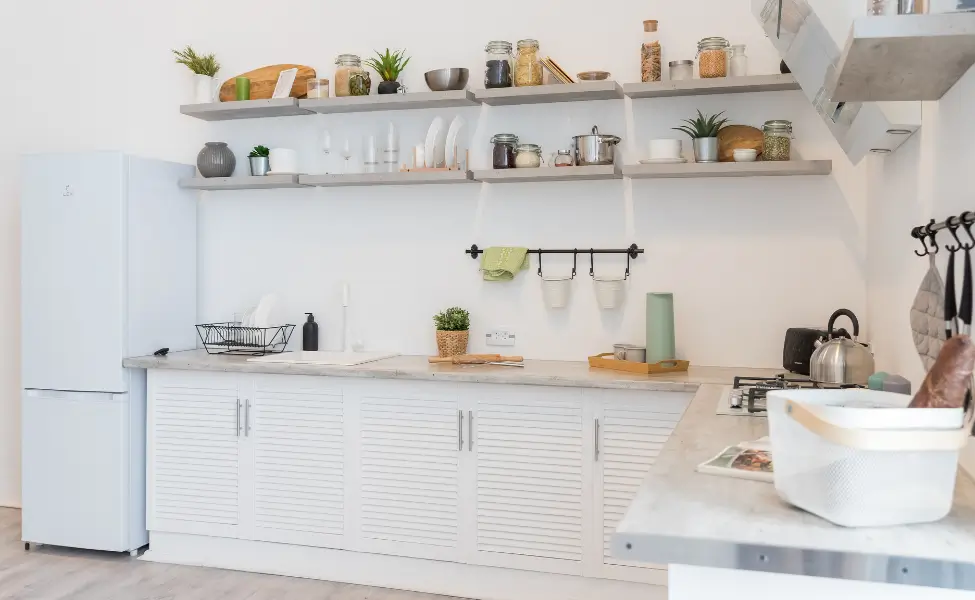
The first week felt awkward. She caught herself heading toward the sink with a dirty plate five times. But the action took 30 seconds per meal. She could manage that.
By week three, it became automatic. Walking into a kitchen with an empty sink changed how she felt about cooking. She added a second small action. Wiping down counters immediately after cooking. Sixty seconds.
Two months later, her kitchen stayed consistently clean without elaborate systems or weekend deep-cleans. Two tiny habits, practised daily, solved what years of ambitious organisation schemes hadn’t touched.
She didn’t need motivation to start. She needed one achievable action, repeated until it became automatic.
Starting Today
Pick one small action from the table above. Complete it today. Notice how satisfaction from finishing makes the second action easier tomorrow.
Give new habits two months of daily practice before adding another. This patience feels uncomfortable, but sustainable change works slowly. Habits form through repetition, and repetition requires time.
Track completions concretely. Check items off with a pen. Write accomplishments in a journal. Your brain needs clear evidence of capability.
Remember that action creates confidence, not the other way around. You don’t build confidence by thinking about being confident. You build it by doing small things, completing them and experiencing proof of your capability.
The goal isn’t perfection. It’s progress. Small steps, taken consistently, genuinely do lead to big wins. Start with one. Add another when the first becomes automatic. Build momentum through tiny victories.
You already have everything you need. Pick one action from the table above. Do it in the next five minutes. Feel what happens when you follow through.
That feeling? That’s confidence building in real time.